Ask what a normal click rate is and you get numbers between 300 and 900 CPM, all presented as if they were the same measurement. They are not. Almost every disagreement about average click speed is a disagreement about interval length that neither side has noticed.
The range, with its interval attached
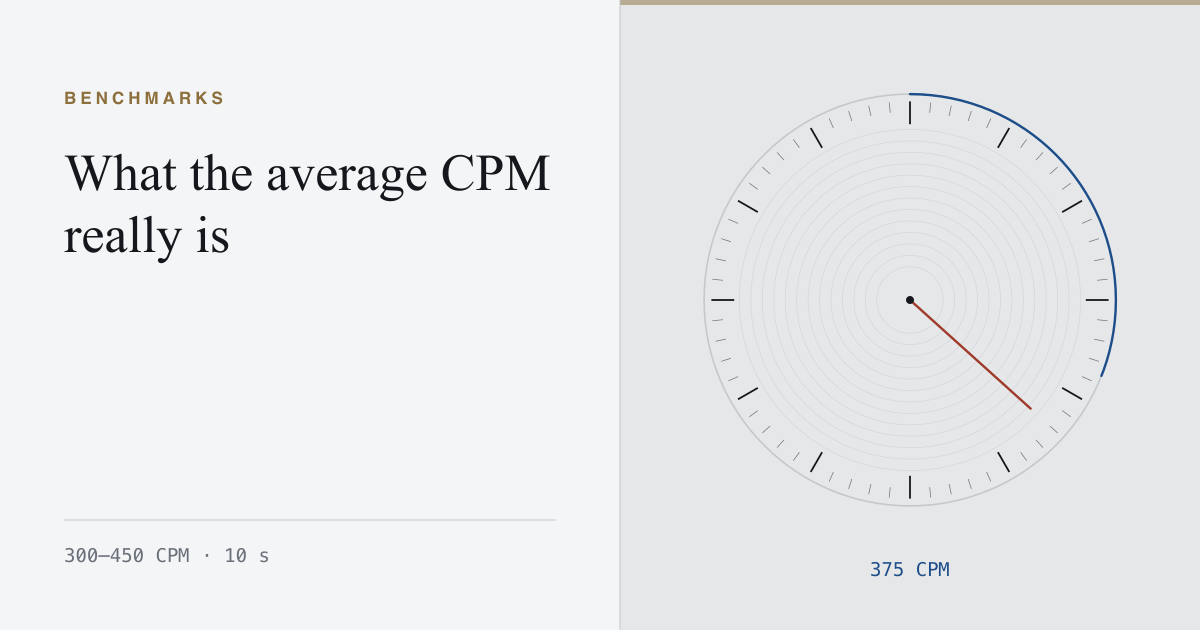
On a ten-second interval, a first honest attempt lands between 300 and 450 clicks per minute — 5 to 7.5 clicks per second. That is the number worth calling average, because ten seconds is long enough to expose a rhythm and short enough that nobody has to pace themselves.
| Interval | Typical first attempt | What it measures |
|---|---|---|
| 1 second | 420–600 CPM | Peak click frequency |
| 5 seconds | 360–480 CPM | A held burst |
| 10 seconds | 300–450 CPM | Rate plus early fatigue |
| 60 seconds | 240–360 CPM | Endurance |
The same hand produces every row. Nothing improved or degraded between them; the window simply got longer, and a longer window includes the part where the finger tires.
Why the short intervals flatter you
Clicks per minute is a projection. A one-second run counts what you did in one second and multiplies by sixty. Eight clicks in that second reads as 480 CPM, but holding eight per second for a full minute is a different ability altogether — one that very few hands have.
That is not a flaw in the arithmetic. It is the reason the interval has to be quoted with the figure. A CPM reading without its interval is not a measurement, it is a boast.
How to find your own average
Run the same interval three times with a full rest between attempts, and take the middle result. One run measures an attempt; three runs measure you. If the three numbers sit more than 60 CPM apart, the variable is not your hand — it is usually posture, a moving mouse, or a switch that has started to chatter.